

Do Organisations Teach the Leadership They Expect?

By Brian Hunter Young
Sharing a series of reflections emerging from my developing doctoral research and from revisiting my professional experience through a different lens. My research is focused on leadership and system transformation within Scotland's integrated health and social care system.
Although the research remains at an early stage, it has already encouraged me to revisit assumptions that I rarely questioned during my years working in organisation development, leadership and coaching. Looking back, I have begun to realise that some of the questions I am now asking did not originate within academia. They first emerged through practice, although I did not always recognise their significance at the time.
Scotland's Health and Social Care Service Renewal Framework (2025–2035) presents an ambitious vision for services that are increasingly prevention-focused, person-led, community-based and digitally enabled. Delivering that vision will depend upon many factors, including policy, governance, workforce capacity, digital innovation and sustainable investment. It has also prompted me to think more deeply about leadership, not simply as a set of individual competencies, but as something that develops through everyday organisational experience.
One question has gradually moved to the forefront of my thinking.
How do organisations actually develop the kind of leadership they expect from people?
Looking back over many years coaching managers at different stages of their careers, I have started to wonder whether the answer is rather different from the one I once assumed. At the time, my attention was naturally directed towards helping individuals become more confident and effective leaders. More recently, however, I have found myself asking whether those conversations were pointing towards a different organisational question altogether. Rather than focusing only on the individual, should we also be paying greater attention to the organisational environment within which leadership is expected to develop?
The assumption we rarely question…
A recurring pattern soon became apparent. Managers who had received feedback about demonstrating "more leadership" rarely challenged the expectation itself. Instead, they almost always questioned whether they possessed the qualities needed to become effective leaders. Many assumed they had somehow fallen short. Some wondered whether they had been promoted too early, while others questioned whether they had the confidence, authority or personal characteristics that leadership appeared to demand. The conversation quickly became one about improving themselves rather than understanding the organisational context within which they were expected to lead.
At the time, helping individuals develop greater confidence and leadership capability seemed entirely appropriate. Coaching created valuable opportunities for reflection, challenged limiting assumptions and supported managers as they developed in their roles. Looking back, however, I have begun to wonder whether those conversations were addressing only one part of a much broader organisational picture. The assumption underpinning much leadership development is both understandable and widely accepted. If individuals receive the right development, coaching and experience, they will become more effective leaders. There is much to support that proposition, and I would not question the contribution that leadership development continues to make.
What has changed is not my confidence in leadership development itself, but my thinking about where leadership is actually learned. Most managers spend only a very small proportion of their working lives attending development programmes or coaching sessions. The overwhelming majority of their learning takes place elsewhere. It is shaped by the meetings they attend, the conversations they witness, the decisions they observe, the behaviours that are recognised and rewarded, and the relationships that define everyday organisational life. Increasingly, I have found myself wondering whether organisations are teaching leadership long before anyone attends a formal development programme.
What organisations teach every day
If leadership is shaped as much by everyday organisational experience as by formal development, it raises an interesting possibility. Every organisation may already be teaching leadership, regardless of whether it intends to do so. The question is not whether learning is taking place. The question is what people are actually learning through the experiences that define their working lives.
Leadership is not learned only through development programmes or competency frameworks. It is learned through meetings where some voices are consistently heard while others remain silent. It is learned through how disagreement is received, how mistakes are handled and how decisions are explained. It is learned through who is trusted with responsibility, who is encouraged to contribute and which behaviours appear to be recognised and rewarded. Long before someone attends a leadership programme, they have already been observing what leadership looks like in practice.
Looking back, I have begun to wonder whether organisations sometimes underestimate the influence of these everyday experiences. They may invest considerable time and resources in developing leaders, while paying less attention to the organisational environment within which that leadership is expected to emerge. If the messages conveyed through everyday organisational life differ from those promoted within leadership programmes, it is perhaps unsurprising that people experience uncertainty about what leadership is really expected to look like.
This has become one of the more thought-provoking aspects of my developing doctoral research. Rather than asking only how organisations can develop better leaders, I have found myself asking a different question.
What is the organisation already teaching about leadership before any formal development begins?
That subtle change in perspective has encouraged me to look less at individual capability in isolation and more at the organisational conditions within which leadership is learned, interpreted and ultimately practised.
I do not yet have an answer to that question, and it would be premature to suggest otherwise. What I do know is that it has fundamentally changed the questions I now ask when reflecting on organisations. Increasingly, I find myself paying attention to the everyday experiences that shape people's understanding of leadership, recognising that these experiences may be every bit as influential as the development programmes organisations invest so heavily in delivering.
Looking differently before acting differently
One consequence of revisiting these experiences has been a gradual change in the kinds of questions I now ask. Earlier in my career, my attention was often drawn towards the individual. How could this manager become more confident? What additional skills might they need? Which leadership behaviours should they strengthen? These remain important questions, and I do not underestimate their value.
Increasingly, however, my developing doctoral research has encouraged me to step back and consider the wider organisational context within which those questions arise. If leadership is learned through everyday organisational experience, then perhaps understanding that experience deserves as much attention as developing the individual. Before asking how someone might become a better leader, it may be equally important to ask what their organisation is already teaching them about leadership.
This subtle shift has not changed my interest in leadership. It has changed where I begin my thinking. Rather than looking first at the individual, I find myself paying closer attention to the organisational environment in which leadership is expected to develop. That includes the quality of relationships, the way decisions are made, how disagreement is handled, the degree of openness that people experience and the recurring ways in which authority, influence and responsibility are exercised across the organisation.
My growing engagement with Human Systems Dynamics, alongside my developing doctoral research, has reinforced this way of thinking. Not because it offers another model of leadership, but because it has encouraged me to observe organisations differently. Increasingly, I find myself paying closer attention to recurring patterns of interaction, the organisational contexts within which people work, the differences that shape behaviour and the exchanges through which trust, influence and meaning are continually created. These observations do not provide answers in themselves, but they often reveal questions that I might previously have overlooked.
For me, that has been one of the most valuable developments so far. The more I look back across my professional experience, the more I realise that many of the challenges attributed to individual leadership may also reflect the organisational conditions within which leadership is expected to emerge. That possibility is becoming an increasingly important part of my developing doctoral research and one that I hope to explore much more fully over the coming years.
A different question…
Reflecting on these experiences has not diminished my belief in the importance of leadership development. If anything, it has reinforced its value. Coaching, mentoring, education and structured development all have an important contribution to make. What has changed is my appreciation that they do not operate in isolation. They become part of a much wider organisational environment that is constantly shaping how leadership is understood, interpreted and practised.
One of the unexpected benefits of my developing doctoral research has been the opportunity to revisit familiar experiences with fresh eyes.
Questions that once appeared straightforward have become more complex, while assumptions that seemed self-evident have become worthy of closer examination. I have found myself becoming less interested in asking whether individuals demonstrate the "right" leadership behaviours and more interested in understanding the organisational conditions that make particular forms of leadership more or less likely to emerge.
Perhaps that is the more fundamental question.
If organisations are continually shaping how people understand leadership through their everyday experiences, then developing leaders may be only part of the challenge. The equally important task may be understanding what the organisation itself is teaching, intentionally or unintentionally, through its relationships, conversations, decisions and everyday patterns of working.
I do not yet know where that question will lead my developing doctoral research. I do know, however, that it has already changed the way I look at organisations and the questions I ask of them. Increasingly, I find myself wondering whether some of the leadership challenges we identify in individuals are, at least in part, reflections of the organisational environments within which those individuals are expected to lead.
That is why I believe the question is worth asking.
Not simply: "How do we develop better leaders?"
Perhaps the more revealing question is: "What leadership is our organisation already teaching every day?"
Patterns I'm noticing…
As my developing doctoral research continues to evolve, several observations continue to return.
Leadership appears to be learned as much through everyday organisational experience as through formal leadership development.
Organisational conditions may shape leadership more profoundly than we sometimes acknowledge.
The behaviours organisations recognise, reward and normalise are continually influencing what leadership comes to mean in practice.
Looking more carefully at organisational patterns may reveal questions that are easily overlooked when attention is directed only towards individual capability.
My developing doctoral research is still in its early stages, and I look forward to seeing where the evidence, conversations and continued learning lead over the coming years.
Until next time... keep noticing the patterns around you.
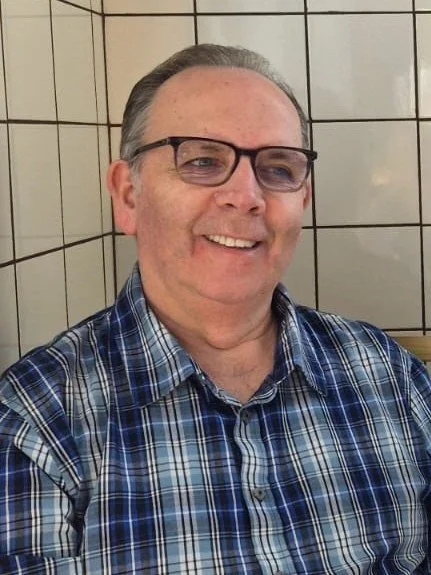
Brian Hunter Young is an HSD Professional and doctoral researcher with more than 20 years’ experience across health, social care and the voluntary sector in Scotland. His career has centred on organisational development, strategic planning, improvement, leadership and working with change across complex systems. His intended doctoral research at the University of Stirling will explore how leadership behaviours shape the conditions for system transformation in integrated health and social care. Brian is curious about how HSD can inform both research and practice, helping us make sense of complexity, see and understand patterns, and find our next wise action when the way forward is often uncertain.
Brian lives and works in Scotland.